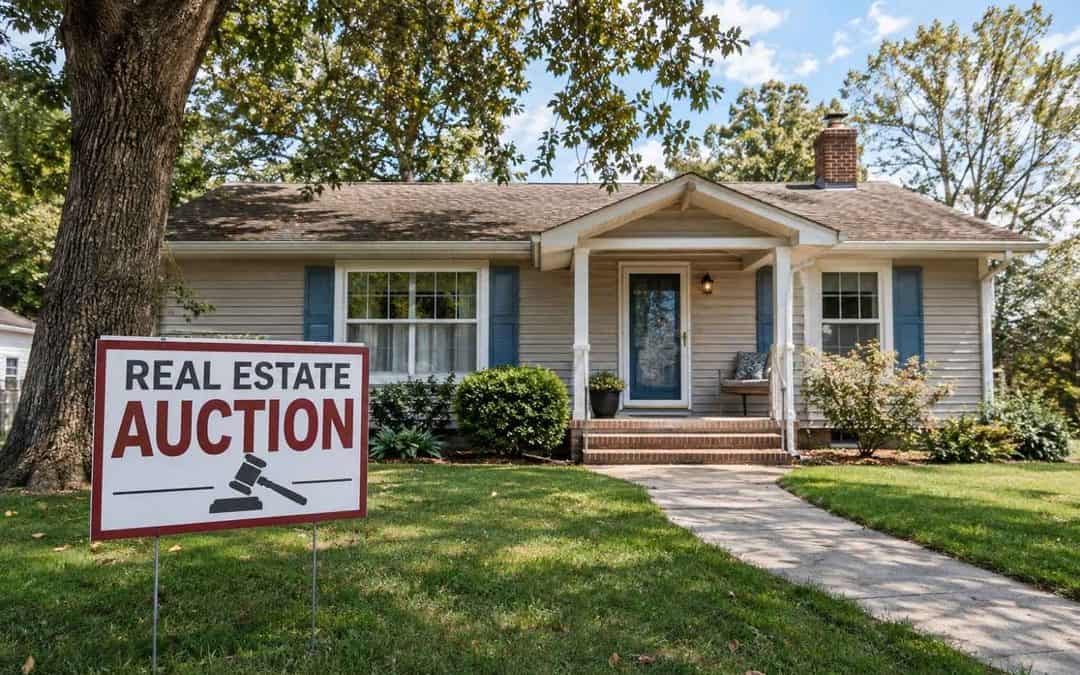

A real estate auction follows a defined sequence: you review the property and sale terms, confirm your financing, register, bid, sign the required agreement if you win, pay the stated deposit, and close by the published deadline. The exact requirements vary by auction, so the terms of sale and purchase agreement govern your obligations.
That distinction matters. “Auction” describes how buyers compete, while the sale documents establish the property’s condition, buyer’s premium, deposit, contingencies, settlement date, and consequences of default. Before placing your first bid, you need to understand both.
This first-time buyer guide explains how the real estate auction process works from initial research through closing. You’ll learn how absolute and reserve auctions differ, what to examine during due diligence, how to calculate your maximum bid, and what happens after the auction ends.
How Does the Real Estate Auction Process Work?
Each stage of the process presents a different decision, from deciding whether a property deserves closer review to determining whether its final cost fits your budget. Buyers should use each stage to verify the next obligation before proceeding, while sellers make separate decisions about the auction structure, access, terms, and sale conditions.
| Stage | What the Buyer Does | What the Seller Does |
| Preparation | Decides whether the property and auction structure fit the purchase goal | Selects the auction structure and sale date |
| Due diligence | Identifies condition, legal, occupancy, and cost issues that could affect a bid | Provides information on the property. |
| Registration | Confirms eligibility to participate and resolves approval issues before bidding opens | No seller responsibilities |
| Bidding | Participates in bidding process | No seller responsibilities |
| Contract | Verifies the final price and completes immediate post-win requirements | Signs applicable documents and accepts the result according to the auction agreement |
| Closing | Resolves lender, title, insurance, and settlement requirements by their deadlines | Transfers ownership under the agreement |
Depending on the auction, you can submit advance bids online and participate in live bidding either in person or remotely. Our platform registration includes identity and contact verification, but every auction has its own terms that you must read before bidding.
What Terms of Real Estate Auctions and Bidding Formats Should You Understand?
You should separate the bidding format from the sale conditions before evaluating an auction. A live, online-only, or simulcast event tells you how to bid, while labels such as absolute, reserve, and minimum bid explain how the property may be sold.
| Auction Type | What It Means | What You Should Verify |
| Absolute auction | The property sells to the highest bidder regardless of price | Registration, deposit, fees, and closing requirements |
| Reserve auction | The seller establishes a minimum acceptable price | How and when the seller confirms acceptance |
| Minimum bid auction | Bidding opens at a published amount | Whether reaching the opening bid guarantees a sale |
| Online-only auction | Bids are submitted through an online platform | Closing time, extension rules, and technical requirements |
| Live auction | Bidding occurs at a scheduled location and time | Check-in procedures and accepted bidding methods |
| Simulcast auction | On-site and online buyers bid during the same event | Platform timing, internet access, and bid recognition rules |
Online auctions may use a soft close, which extends bidding when a bid arrives near the scheduled end. This reduces last-second bidding and gives participants another opportunity to respond. Extension rules aren’t universal, so read the auction-specific terms rather than relying on another event’s procedures.
Is Buying Real Estate at Auction Right for You?
Buying at auction may suit you when its structured bidding process and published terms align with the way you’re prepared to purchase property. It can appeal to home buyers, investors, business owners, and real estate professionals who value transparent competition and predetermined terms.
Use this readiness checklist before registering:
- You can evaluate the property’s condition before the bidding deadline.
- You understand whether the sale is absolute, reserve, or subject to a minimum bid.
- You have reviewed the buyer’s premium and other disclosed charges.
- Your lender understands the auction schedule and lack of financing contingencies, when applicable.
- You have funds available for the required deposit.
- You can close by the deadline in the purchase agreement.
- You’re prepared for your winning bid to create a binding obligation.
- You can stop bidding when the total cost reaches your limit.
Consider consulting a Pennsylvania real estate attorney, lender, inspector, or tax professional when the property involves an estate, tenants, unclear occupancy, environmental concerns, title questions, commercial use, or unfamiliar zoning. Professional advice can help you evaluate issues outside an auctioneer’s role.
What Should You Research Before Auction Day?
You should complete due diligence before bidding because your opportunity to investigate the property or change your obligation may be limited after you win. Your research may uncover additional costs, property restrictions, or potential risks that could affect how much you’re willing to bid.
Available documents differ by property. Ask the auctioneer what has been provided, then review the following items where applicable:
- Terms and conditions, including the buyer’s premium and payment rules
- Agreement of sale
- Property disclosure documents
- Deed, legal description, survey, or parcel map
- Available title information and known liens or easements
- Most auctions are sold free of liens and encumbrances
- Tax records and current assessment
- Zoning classification and permitted uses
- Lease, occupancy, or tenant information
- Inspection reports, environmental records, or repair estimates
- Utility access, well, septic, and right-of-way information
- Settlement deadline and possession date
- Default remedies and treatment of the deposit
Attend a scheduled preview and inspect the property as fully as the terms permit. Bring an appropriate professional when structural condition, land boundaries, commercial systems, or renovation costs could materially affect your budget.
How Should You Confirm Financing Readiness?
You should ask your lender specific questions about auction purchases, underwriting time, property eligibility, and funding deadlines before you bid. A preapproval may not account for a short settlement schedule, an as-is property, or the auction’s payment structure.
Ask your lender:
- Does the loan program permit auction purchases?
- Can underwriting finish by the stated settlement date?
- Is an appraisal required, and how quickly can it be scheduled?
- Will the property’s current condition qualify for financing?
- Can the buyer’s premium be financed, or must you pay it separately?
- What happens when the property appraises below the total purchase price?
Ask the auctioneer how much deposit is required, when it is due, and which payment methods are accepted. Discuss backup funding with your lender or financial adviser in case appraisal, underwriting, or fund-transfer delays threaten the closing date, and never assume one company’s rules apply to another auction.
How Do You Calculate a Maximum Bid?
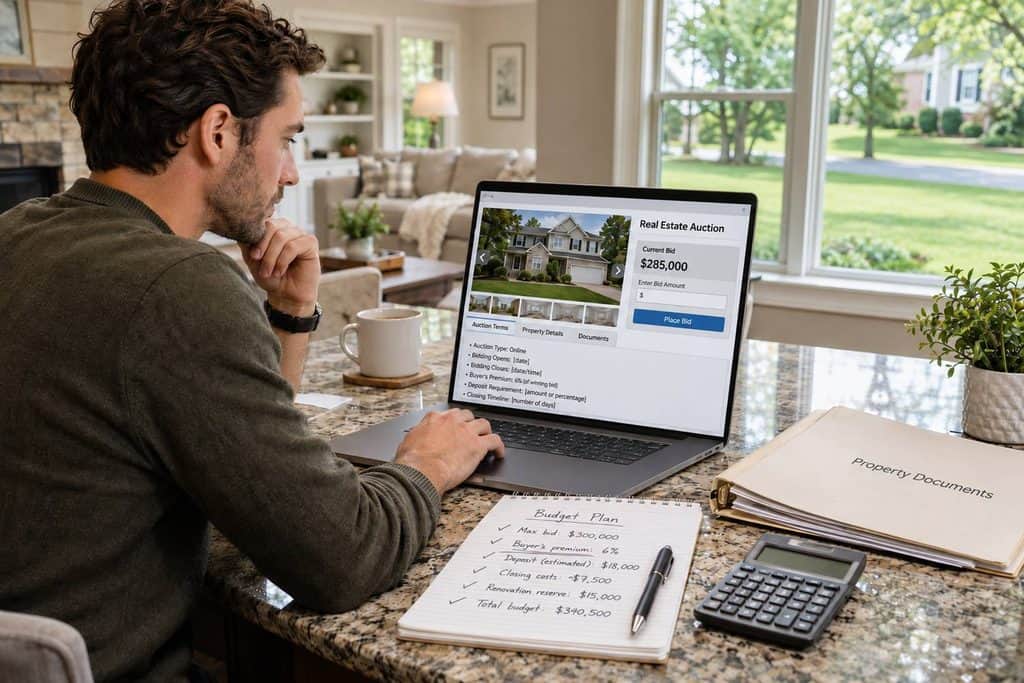
Calculate your maximum bid by working backward from the most you can spend after accounting for the buyer’s premium and other anticipated costs. Your bid is only one part of the purchase price.
Here is a hypothetical example:
| Cost Component | Hypothetical Amount |
| Winning bid | $250,000 |
| 10 percent buyer’s premium | $25,000 |
| Contract purchase price | $275,000 |
| Estimated inspections, legal review, title, and closing costs | $7,500 |
| Estimated immediate repairs | $17,500 |
| Estimated total commitment | $300,000 |
This example is for planning only. Premiums, transfer costs, taxes, settlement fees, repairs, and financing expenses depend on the auction, property, jurisdiction, and buyer.
Set your limit before bidding begins and keep it visible. Real-time competition can make a small increase feel harmless, but each bid may also increase the premium and your financing requirement.
How Do You Register and Place a Bid?
Register by creating an account, verifying the required information, accepting the auction terms, and receiving approval to bid. Complete these steps early so a verification issue doesn’t prevent participation.
If you’re bidding in one of our real estate auctions, follow the deposit and payment instructions listed for that property. Platform approval alone does not authorize a different payment method or alter the sale requirements.
Common bidding terms include:
- Bid increment: The minimum amount by which the current bid increases.
- Regular bid: A bid placed at the next available amount.
- Maximum bid: A confidential ceiling that allows the system to bid incrementally on your behalf.
- Prebid: A bid submitted before the live or scheduled closing period.
- Linked lots: Lots whose timing or outcome may be connected.
- Soft close: An extension triggered by bidding near the scheduled end.
- Buyer’s premium: A charge added to the winning bid under the published terms.
A maximum bid can help you follow your budget, but it doesn’t remove your responsibility to monitor the auction. Check notifications, platform status, linked lots, and extension rules while bidding remains open.
What Happens After You Win a Real Estate Auction?
Winning the bid creates an immediate, binding purchase obligation, so you must act promptly and follow the controlling sale documents. Delays at this stage can put your deposit or purchase at risk.
Review these items immediately:
- Final purchase price, including the buyer’s premium
- Deposit amount and delivery deadline
- Contract signatures and required identification
- Title and settlement contacts
- Financing, insurance, and appraisal deadlines
- Possession date and occupancy terms
- Adjustments for taxes, rents, or utilities
- Consequences of missed payments or buyer default
At H.K. Keller, the winning bidder signs a binding agreement backed by a nonrefundable down payment. Our real estate auctions commonly close 30 to 45 days after auction day, but your auction’s contract controls the actual deadline.
What Mistakes Should First-Time Bidders Avoid?
The most common mistakes come from bidding before the buyer has verified the property, terms, financing, or total cost. Each one can be reduced through preparation.
| Mistake | Preventive Action |
| Looking only at the current bid | Calculate the premium and all expected costs before setting a limit |
| Assuming financing will include contingencies | Ask your lender and read the agreement before registering |
| Skipping the preview | Inspect the property and bring qualified help when needed |
| Ignoring occupancy or title questions | Review available documents and seek legal advice before bidding |
| Waiting until the final minute to register | Complete verification early and test your login |
| Misunderstanding a reserve | Ask how seller confirmation works |
| Chasing another bidder | Write down your maximum total commitment and stop there |
| Treating platform rules as universal | Read the terms attached to that specific auction |
How Does H.K. Keller Approach Real Estate Auctions?
We use our real estate and auction experience to help buyers understand their obligations and help sellers select suitable terms, reach qualified bidders, and move toward closing. Our team includes licensed Pennsylvania real estate professionals and licensed auctioneers, and our family has connected buyers and sellers across Central Pennsylvania since 1960.
That combined perspective helps us serve both sides of the transaction. Seller’s Auction Advantage provides owners with auction strategy, marketing, bidding, and closing coordination. Buyer’s Auction Advantage gives buyers a structured path for reviewing opportunities, understanding auction terms, and participating through available bidding formats.
When Is a Real Estate Auction Appropriate for a Property Seller?
A real estate auction may be appropriate for a property seller who values a firm sale date, open competition, predetermined terms, or a market-based approach for a difficult-to-price property. Common examples include estate properties, homes needing repairs, historic homes, investments, land, and multiple parcels.
We can also combine real estate auction strategy with pre-auction offers when the published terms permit it. Sellers receive a scheduled auction event as a clear decision point while retaining the option to consider an acceptable early offer.
How Does H.K. Keller’s Real Estate Auction Process Differ From Other Selling Methods?
Our combined auction and traditional listing capability, property-specific marketing, and multiple bidding formats allow us to match the sales method to the property while giving buyers practical ways to participate. Instead of forcing every property into one model, we can assess the seller’s situation and offer online prebidding, real-time remote bidding, or in-person bidding when appropriate.
For sellers, our marketing channels are selected to expand buyer reach, give interested parties access to the information they need, encourage competitive bidding, and create a clear path to the scheduled sale date. A campaign may use Google and Facebook advertising, real estate websites, our bidding platform, email and text notices, signs, and direct mail. For buyers, we emphasize a practical rule: review the property documents and auction-specific terms before placing a bid.
What Resources Can Help You Prepare?
Whether you’re buying, selling, or helping a client navigate the auction process, we offer resources to help you make informed decisions.
- Explore our website: Browse available auctions, learn about our real estate services, and connect with our team.
- Learn how online bidding works: Watch our online bidding tutorial for guidance on registration, phone verification, maximum bids, bid increments, linked lots, and notifications.
- Prepare to buy at auction: Our Buyer’s Auction Advantage provides information about auction terms, bidding options, and what to expect during the buying process.
- Explore selling at auction: Our Seller’s Auction Advantage helps property owners and their representatives understand how an auction can fit their selling goals.
- Partner with our auction team: Our Realtor Partnership Program allows real estate professionals to remain involved with their clients while taking advantage of our auction expertise and marketing resources.
Before bidding, always review the terms and conditions for the specific property you’re considering. Those documents establish the applicable fees, deposits, deadlines, and buyer responsibilities.
Ready to Explore a Real Estate Auction?
Start by selecting a specific auction and reviewing its property information, schedule, and controlling terms. Questions about participating or evaluating the opportunity can be addressed before registration.
Browse available auctions on our website, or call our Lancaster office at 717-879-0110 for help with Buyer’s Auction Advantage.
Frequently Asked Questions
What happens when bidding does not reach the reserve price?
The property may remain unsold unless the seller chooses to accept the highest bid under the stated terms. The auction documents should explain the confirmation process.
Can you inspect an auction property more than once?
Yes, additional access depends on the seller and the scheduled preview arrangements. Ask the auctioneer early when you need a contractor, inspector, or other adviser to visit the property.
Can someone bid for you at a real estate auction?
Proxy, absentee, and agent bidding may be allowed when arranged in advance and supported by the required authorization. Ask the auctioneer which forms and identification are needed before the event.
Is the buyer’s premium the same as a real estate commission?
A buyer’s premium is an amount added to the winning bid under the auction terms. There are usually no additional charges committed to the buyer or seller.