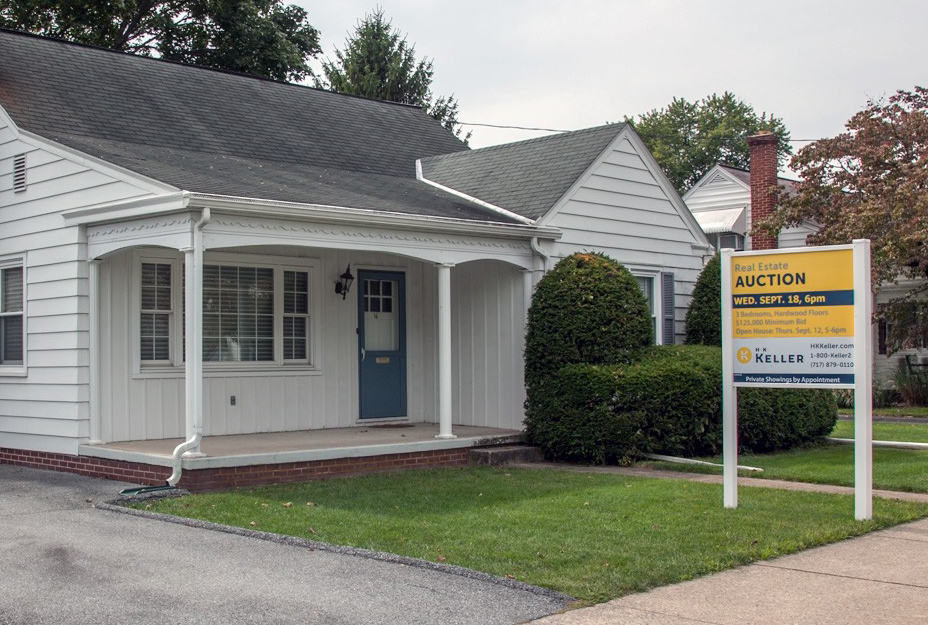


Selling your house at auction may be a good option if you want a set sale schedule, competitive bidding, and clear terms before buyers participate. But an auction isn’t automatically the right choice for every property. The best approach depends on your priorities, the property’s characteristics, local buyer demand, and how much price uncertainty you’re comfortable accepting.
Auctions aren’t limited to foreclosures or distressed homes. They can be effective for a variety of real estate transactions, including residential, agricultural, and commercial properties. Understanding how the process works, what protections are available, and how it compares to a traditional listing can help you make an informed decision.
What Does Selling Your House at Auction Mean?
Selling your house at auction means offering the property to qualified buyers who compete through a structured bidding process. Instead of setting an asking price and negotiating privately with individual buyers, you establish an auction date and invite interested parties to bid under published terms.
Real estate auctions may take place in person, online, or through simulcast events that accommodate both types of participation. Some auctions also allow online prebidding before the scheduled event.
An auction creates a defined process for attracting offers, but it doesn’t guarantee a particular selling price. The outcome depends on buyer interest, property characteristics, marketing effectiveness, and the auction format you select.
How Do You Know if You Should Sell Your House at Auction?
You can determine whether an auction fits your goals by evaluating your priorities, the property’s market potential, and the financial implications of each selling method. The seven steps below walk you through that decision.
Step 1: Define Your Most Important Sale Priorities
Before choosing how to sell, identify what a successful transaction would look like for you. Your circumstances may involve financial obligations, scheduling requirements, or decisions that need approval from other parties.
Consider these questions:
- Do you need to complete the sale within a particular timeframe?
- Would you prefer to sell the property as-is?
- How much disruption can you accommodate for showings and inspections?
- Are you selling only the real estate, or do you also need to sell its contents?
- Do co-owners, attorneys, lenders, or other stakeholders need to approve the transaction?
- Do any existing agreements or restrictions affect the sale?
Your answers will help a real estate professional identify which approaches deserve further consideration. They also provide a starting point for evaluating proposals and setting realistic expectations.
Step 2: Evaluate the Property’s Auction Potential
A property’s auction potential depends on whether it can attract enough qualified buyers to generate meaningful competition. Properties that are unusual, difficult to price, or appealing to specialized buyers may be particularly good candidates.
Examples include:
- Homes requiring substantial repairs or updates
- Inherited homes and estate properties
- Historic or distinctive homes with few comparable sales
- Farms, acreage, and development land
- Properties that can be sold in multiple parcels
- Rental properties and real estate investments
- Commercial buildings
- Properties involved in relocation or ownership transitions
- Homes that haven’t attracted suitable offers through a traditional listing
Being on this list doesn’t automatically make a property a strong auction candidate. A real estate professional should also examine accessibility, zoning, occupancy, available documentation, and market activity.
For example, an unusual rural property might appeal to several groups of buyers, but those buyers need enough information to understand its potential uses. The more clearly a property’s value and opportunities can be communicated, the easier it becomes to develop an effective sales strategy.
Step 3: Compare the Three Selling Methods
Auction, traditional listing, and hybrid approaches offer different levels of flexibility and control. Comparing them side by side can help you understand how each method might affect your sale.
| Decision Factor | Auction | Traditional Listing | Hybrid Approach |
| Sale schedule | Auction date established in advance | Timing depends on receiving and accepting an offer | Scheduled auction may remain in place while earlier offers are considered |
| Price discovery | Buyers compete through bidding | Seller establishes a list price with professional guidance | List-price exposure and bidding may both play a role |
| Offer evaluation | Price and published terms drive the result | Offers are compared based on price, financing, and contingencies | Depends on the stage of the sale |
| Buyer visibility | Participants can generally observe current bidding | Competing offers are typically private | Varies by phase |
| Seller protection | Depends on the auction format | Seller chooses whether to accept an offer | Depends on the written agreement |
| Showings | Often concentrated into scheduled previews | May occur throughout the listing period | May combine conventional showings with previews |
| Contract terms | Established before bidding | Negotiated with the buyer | Depend on when and how the property sells |
Each approach has potential advantages, and the highest possible offer isn’t the only measure that matters. Focus on the method most likely to deliver the outcome you defined in Step 1.
Ask for an estimated seller net sheet for each viable option. Comparing projected proceeds using consistent assumptions will help you evaluate the financial differences more accurately.
Step 4: Choose the Appropriate Auction Format
The auction format determines how bidding begins and what price protections may be available to you. Three common structures are absolute, reserve, and minimum-bid auctions.
- Absolute auction: The property sells to the highest bidder regardless of price. This can encourage participation, but you must be prepared to accept the final result.
- Reserve auction: You establish a minimum acceptable price. If bidding doesn’t reach that amount, the written terms may allow you to decline the highest offer.
- Minimum-bid auction: Bidding begins at a publicly established amount, giving participants a clear starting point.
The distinction between these formats matters because each creates different expectations for buyers and sellers. Before selecting a structure, ask how the reserve or minimum bid is established, what approval rights you retain, and what happens if the auction doesn’t produce an acceptable result.
Step 5: Review the Marketing Plan
An effective real estate auction requires a marketing strategy designed to attract people who are likely to purchase the particular property being offered. Simply advertising an upcoming auction isn’t enough.
H.K. Keller’s marketing approach may include Google and Facebook advertising, real estate websites, its online bidding platform, buyer alerts, signage, and direct mail. The appropriate combination depends on the property and its potential buyer audience.
When reviewing a proposed marketing plan, ask:
- Which buyer groups will the campaign target, and why?
- How long will the property be marketed before bidding closes?
- What property information will be available for buyer evaluation?
- How will previews, inquiries, and bidder registration be managed?
- What information will you receive about campaign performance and buyer interest?
- Can the company provide examples of marketing campaigns for similar properties?
These questions help you evaluate the reasoning behind the proposed strategy rather than judging it solely by the number of advertising channels. Marketing a working farm, for example, requires different property information and buyer outreach than selling a suburban home. A well-developed proposal should demonstrate an understanding of those differences.
Step 6: Examine the Agreement and Sale Terms
Before committing to an auction, review the seller agreement and proposed buyer terms carefully. These documents establish financial responsibilities, obligations, and procedures that may affect the outcome of your sale.
Pay particular attention to:
- Fees and expenses: Identify auction commissions, marketing charges, buyer’s premiums, and who is responsible for each cost.
- Deposits and buyer obligations: Understand the required down payment, when funds become nonrefundable, and the remedies available if a buyer defaults.
- Contingencies: Determine whether financing, inspections, appraisals, or other conditions are permitted.
- Property disclosures: Confirm which documents and known property conditions must be disclosed to prospective buyers.
- Possession and included property: Establish when the buyer receives possession and what fixtures or personal property are included.
- Cancellation and withdrawal: Review your responsibilities if you withdraw the property or cancel the auction.
- Post-auction procedures: Clarify what happens if the property doesn’t sell and whether additional negotiations are permitted.
The agreement should reflect the auction structure and seller protections you’ve selected. Don’t assume that provisions used in another auction will automatically apply to yours.
When selling an estate, trust asset, partnership property, farm, or commercial building, consider consulting an attorney or tax professional before signing. These transactions may involve ownership, authority, or tax considerations that require specialized guidance.
Step 7: Plan for Closing Before Marketing Begins
Preparing for closing early can help you prevent avoidable delays after a successful auction. The goal is to identify documentation or ownership issues before buyers begin making commitments.
Depending on the property, you may need deeds, surveys, leases, mortgage payoff information, tax records, environmental reports, zoning documentation, and applicable disclosures. Executors and trustees should also have documentation confirming their legal authority to sell. Address any outstanding ownership questions, title concerns, or lender requirements as early as possible.
In our experience, most properties close within 45 days after auction, and sellers establish the settlement timeframe in the terms of sale. Your actual closing date will depend on the agreement and any circumstances that affect the transaction.
What Are the Main Benefits of Selling at Auction?
The main advantages of selling at auction come from its structure, which gives you more control over when and how buyers compete for your property. Depending on the property and your goals, those benefits can include:
- Concentrated buyer interest: Rather than responding to unrelated offers over an extended period, you can present the property to interested buyers through a coordinated sales process built around a specific event.
- Terms established before bidding: Buyers can review their obligations in advance, which may reduce the back-and-forth negotiations that sometimes occur after an offer is submitted.
- Wider buyer reach: Online bidding makes participation more accessible to people outside the immediate market, which can be valuable when a property appeals to investors, agricultural buyers, or others who don’t necessarily live nearby.
If you’re an owner managing estate settlements or multiple assets, auction services may also offer you an opportunity to coordinate the sale of real estate and personal property. This can be useful when a home, its furnishings, equipment, or other belongings need to be addressed as part of a larger transition. These advantages are most meaningful when the property attracts suitable buyers and the auction terms support their participation.
What Risks and Tradeoffs Should You Consider?
The primary risk of selling at auction is that bidding may not produce the price you hope to receive. Even with an organized campaign and interested buyers, the final result depends on the market and what participants are willing and able to pay.
Several other possibilities deserve consideration:
- Limited competition: If fewer qualified bidders participate than expected, the auction may not generate enough competition to support your price expectations.
- Buyer financing limitations: Strict payment or closing requirements may prevent otherwise interested buyers from participating.
- Unsuccessful sale: If an auction doesn’t meet the required reserve, you may need additional marketing or a different selling strategy while continuing to carry the property.
- Reduced flexibility: Once an auction is underway, changing the schedule or terms may be difficult or involve contractual obligations.
- Lower-than-expected net proceeds: Transaction expenses and other financial obligations can affect how much money you ultimately receive.
Ask the auction company how it evaluates buyer interest before the event and what options are available to you if participation is lower than anticipated. Understanding these scenarios in advance will help you determine whether the potential advantages justify the financial and practical risks.
When Is a Traditional Listing Better Than an Auction?
A traditional listing may be a better choice when you want more flexibility to negotiate offers, adjust your asking price, or manage the timing of your move. It allows you to consider each buyer’s proposed terms individually rather than relying on a scheduled bidding event.
A conventional sale may be particularly useful when:
- Comparable sales provide a reliable basis for establishing an asking price.
- Potential buyers are likely to need mortgage financing and appraisal contingencies.
- You want to make repairs or improvements before accepting an offer.
- You’re willing to spend additional time finding a buyer who meets specific requirements.
Some sellers may also benefit from a hybrid strategy that combines elements of both approaches. For example, a property could be marketed with a scheduled auction while the seller remains open to acceptable pre-auction offers, provided the agreement permits that arrangement. The right strategy depends on how the available options align with your financial expectations and personal circumstances.
How Does H.K. Keller Help Sellers Evaluate Their Options?
We help property owners evaluate auction and traditional real estate sales by drawing on experience in both methods. Rather than assuming every property belongs at auction, our team assesses each property’s characteristics, current market conditions, and your objectives. Through our Seller’s Auction Advantage™ services, we work with you to evaluate potential auction opportunities and establish the right approach to marketing, bidding, and closing.
The Keller family has connected buyers and sellers across Central Pennsylvania since 1960. Our team includes licensed real estate professionals and licensed auctioneers, and we proudly belong to the National State and Local Association of Realtors, National Auction Association as well as the Pennsylvania Auctioneers Association.
Schedule a Property Auction Consultation With H.K. Keller
Selling at auction can be a practical solution when your property has strong buyer appeal. The decision should ultimately reflect your financial priorities, available selling options, and willingness to accept the terms and risks involved. The most useful next step is a property-specific evaluation rather than making a decision based on general assumptions about auctions.
Contact H.K. Keller at 717-879-0110 to schedule a consultation. Our team can review your property, discuss your goals, and help you compare auction, traditional listing, and hybrid options before you decide how to proceed.
Frequently Asked Questions
Can I accept an offer before the auction?
You may be able to accept a pre-auction offer if your agreement and the published auction terms allow it. Ask how offers will be presented, who has authority to approve them, and whether accepting an offer would cancel the auction or result in additional expenses.
Can farmland be offered in separate parcels?
Farmland can be offered through a multi-parcel auction that allows bidding on individual tracts and combinations. Surveys, access arrangements, zoning, subdivision requirements, and the method used to determine the winning configuration should be established before bidding begins.
What happens when bidding does not reach the reserve?
When bidding doesn’t meet the reserve, the outcome depends on the written auction terms. You may be able to decline the highest bid, accept it, or negotiate with the leading bidder. Confirm your options before the auction so you understand what decisions you can make afterward.
Can a property with tenants be sold at auction?
A tenant-occupied property can be sold at auction, subject to its leases and applicable legal requirements. Prospective buyers should receive accurate information about rental agreements, security deposits, access, possession, and any existing tenant obligations.
Does an auction buyer still need a property inspection?
Auction buyers should complete any permitted property inspections and due diligence before bidding. Some auction contracts limit or exclude post-bid inspection contingencies, making it important for buyers to review disclosures, attend available previews, and understand the condition of the property in advance.
Who signs the auction agreement for an estate or trust?
The person with documented legal authority must sign the auction agreement for an estate or trust. Executors and trustees should consult their attorney and provide the appropriate appointment documents or trust records before the property is marketed.
Can I sell a commercial property with existing leases?
Yes. You can sell a commercial property at auction while leases remain in effect. Buyers will generally need accurate information about rent rolls, renewal options, operating expenses, deposits, defaults, and any lease provisions affecting the transfer of ownership.
Is a buyer’s premium the same as a seller’s commission?
A buyer’s premium is not the same as a seller’s commission. A buyer’s premium is an amount charged to the successful bidder under the auction terms, while a seller’s commission is compensation paid by the seller under the applicable agreement. Both can influence the financial outcome of the sale, so the calculation and responsibility for each charge should be clearly documented.